Arbour Longevity › Hair Restoration
Your follicles may not be gone.
Let’s find out first.
Hair loss is biological, not inevitable. Where a follicle is dormant rather than lost, PRP delivers a regenerative signal that can wake it back up — and determining which of those you are dealing with is the first thing we do. We pair PRP at follicular level with an assessment of what has been driving the thinning.
The treatment
Your own platelets,
placed where they work.
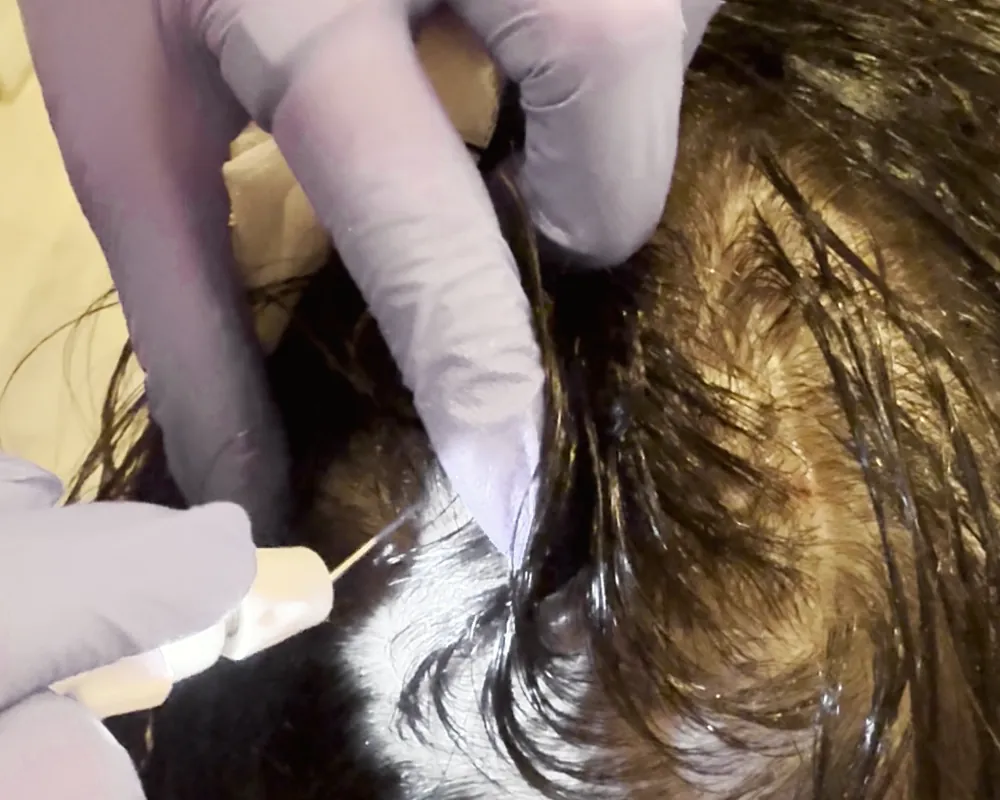
Platelets are your body’s first responders, carrying the growth factors that signal tissue repair. Concentrate them and place them at follicular depth, and you are delivering a regenerative signal directly to follicles that have gone quiet.
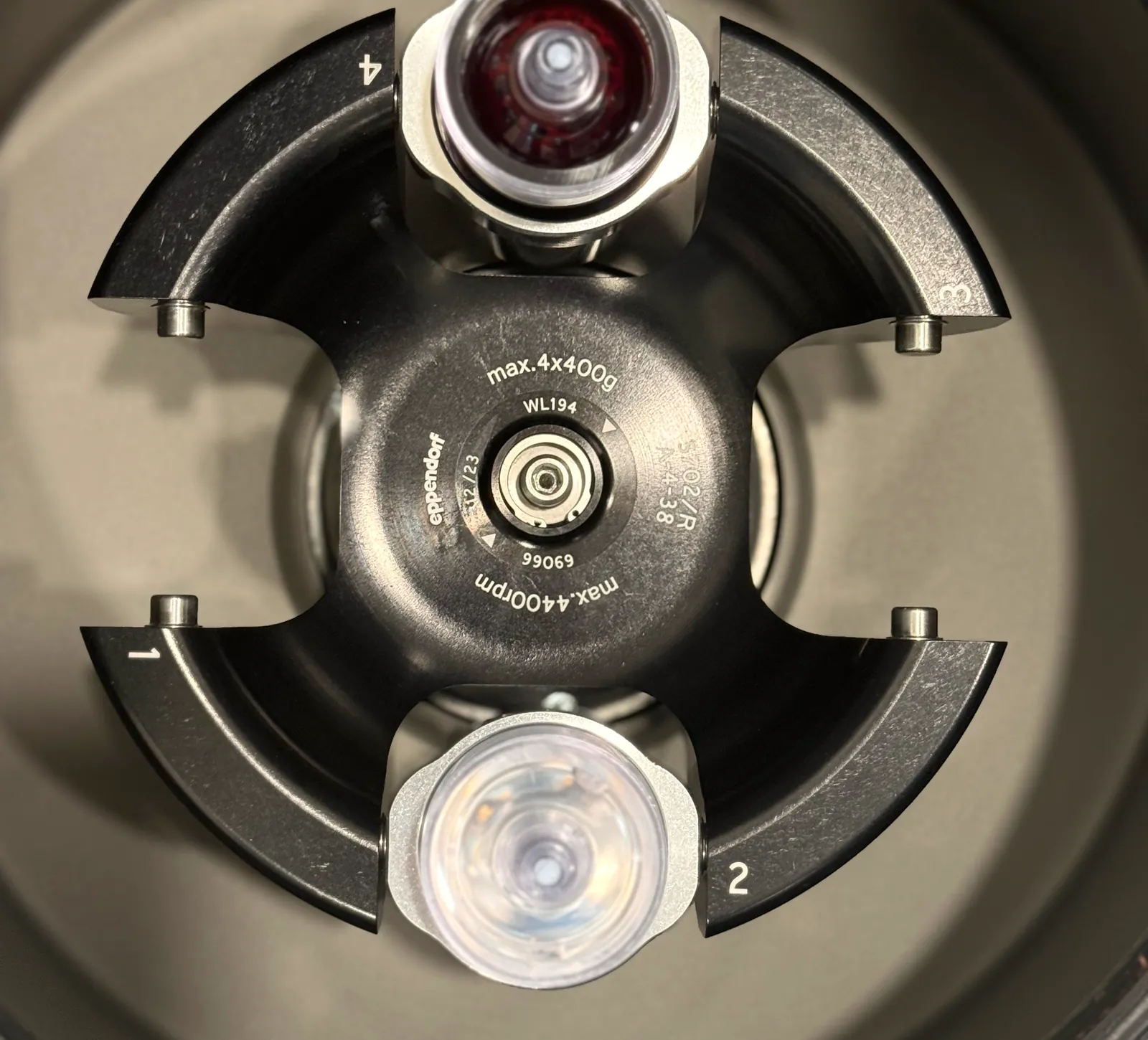
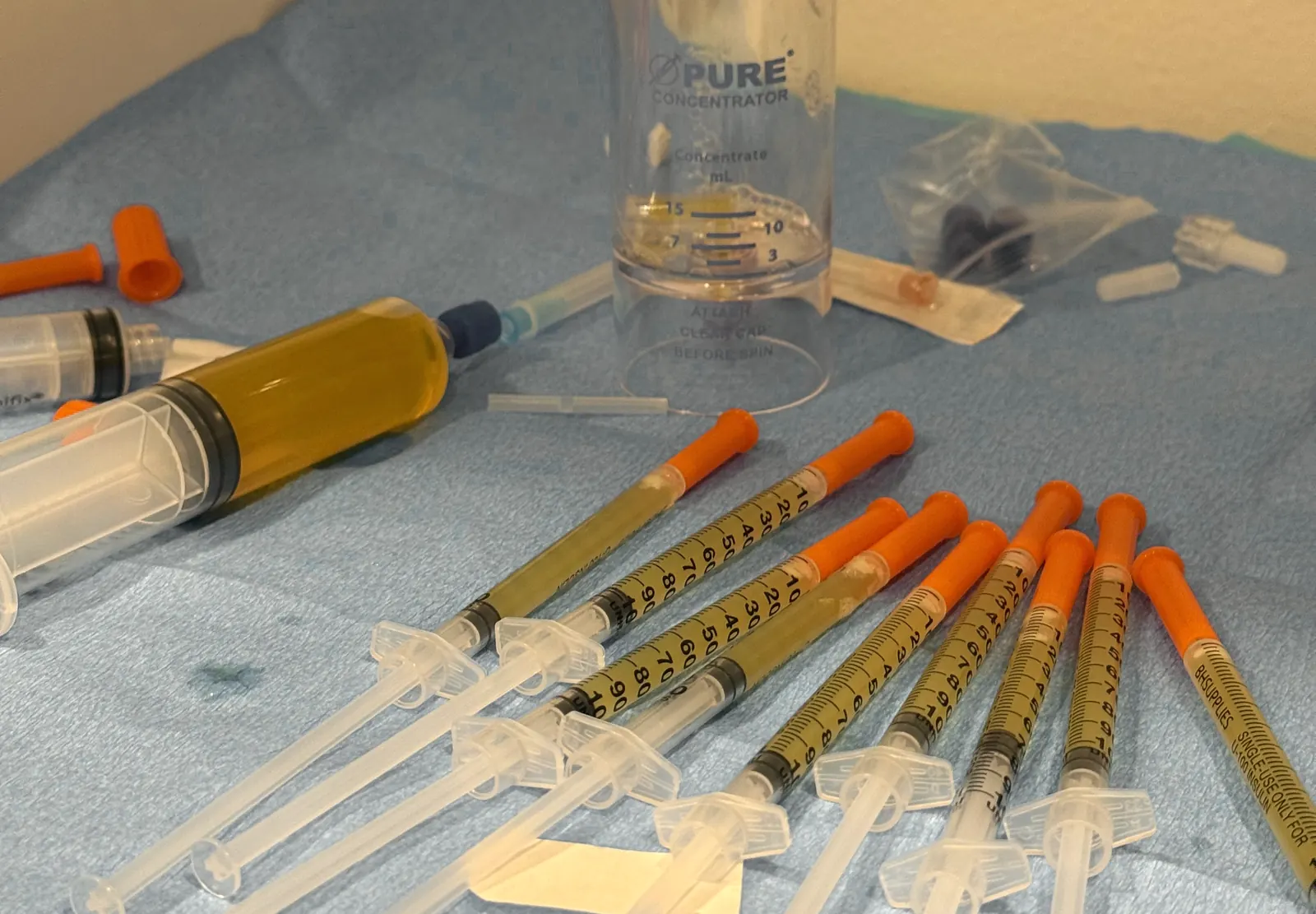
Our dual-centrifuge protocol produces PRP at five to seven times baseline platelet concentration — the concentration range most commonly cited in the PRP literature as therapeutically meaningful. A single-spin preparation yields a more dilute platelet concentrate.
- Investment
- From $699
- Mechanism
- Follicular-level PRP injection
- Concentration
- Dual-centrifuge · 5–7× baseline
- Results
- Typically 6–8 weeks · full response usually 3–6 months
- Downtime
- None · return to work same day
- Best for
- Thinning in men and women
PRP and CAT resurfacing are two separate hair protocols and are priced separately. Many patients do both — PRP for the regenerative signal, CAT resurfacing for the scalp itself. Which one leads depends on what we find at your consultation.
The part most clinics skip
No treatment outruns
an unaddressed cause.
Hair loss is usually downstream of something: nutrient deficiency, thyroid dysfunction, inflammatory burden. These drive thinning for years before it becomes visible in the mirror, and they keep driving it while you treat the surface.
A regenerative protocol layered on top of an unaddressed root cause tends to underperform. So we assess both. That is what a clinician holding a functional medicine board certification alongside family practice actually buys you.
See what we testWhat to expect
Hair takes time.
Here is the honest timeline.
Anyone promising you a result in three weeks is selling something. Follicles operate on a growth cycle, and that cycle sets the pace.
Weeks 1–6
Nothing visible, and that is expected. The regenerative signal is being received and the follicle is re-entering its growth phase beneath the surface.
Weeks 6–12
Shedding slows first — usually the earliest sign anything is working. Fine new growth begins to appear along the hairline and part.
Months 3–6
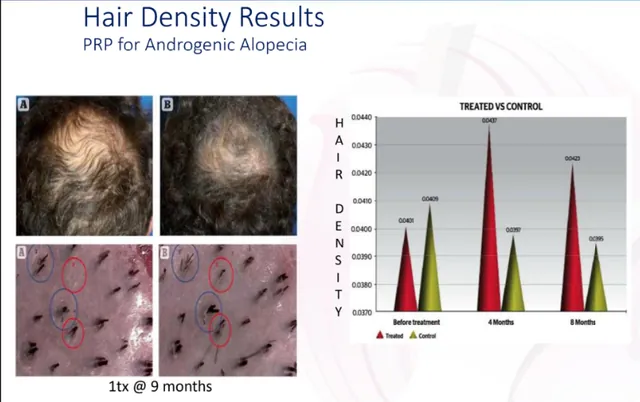
Density and caliber typically improve as new hairs mature and thicken. For many patients this is where the change becomes visible to other people, not just to them.
Hair questions
What people ask.
Does PRP for hair actually work?
For dormant follicles, yes. For follicles that are gone, no treatment reactivates them. That distinction is what the consultation determines, and we will tell you honestly which category you are in.
Does it hurt?
We apply topical numbing before the injections, so most patients find it very tolerable. You may feel brief pressure as the PRP is placed, but it is not the sharp discomfort people expect — and there is nothing to recover from afterwards.
How many sessions?
An initial series, then maintenance. The exact number depends on your starting density and how long the thinning has been progressing.
Is there downtime?
No. Some tenderness the same day. Most patients return to work directly afterward.
Does it work for women?
Yes. Female pattern thinning responds well, and the root-cause workup is often especially productive in women because nutrient and thyroid drivers are common.
What makes your PRP different?
Dual-centrifuge preparation at five to seven times baseline platelet concentration. Single-spin systems produce a more dilute product, which is a real difference in yield rather than a marketing distinction.
How soon will I know if it is working?
Reduced shedding is usually the first signal, around six to twelve weeks. Visible density follows at three to six months.
Will I need to keep doing it?
Maintenance sessions preserve the gain. Hair loss is a progressive process, so holding ground is part of the goal.
Can I combine it with microneedling?
Yes, scalp microneedling is commonly used alongside PRP and we will tell you whether it adds value in your case.
What does it cost?
Discussed at the consultation with specific numbers, before you commit to anything.
Free consultation
Find out if your follicles are still viable.
That is the single question worth answering first, and it is free to ask.
Book your free consultationAccredited & licensed
 Cellular Medicine Association
Licensed Vampire Facial® provider American Academy of Procedural Medicine
Board certified · Anti-Aging & Functional Medicine

A regenerative aesthetics and longevity clinic — skin, hair, and root-cause medicine under one roof.
Treatments
Visit
- 2217 Packard St #15
- Ann Arbor, MI 48104
- Thu–Mon · 10am–7pm
- By appointment